
Assisted Living Dryer Vent Cleaning Jacksonville FL
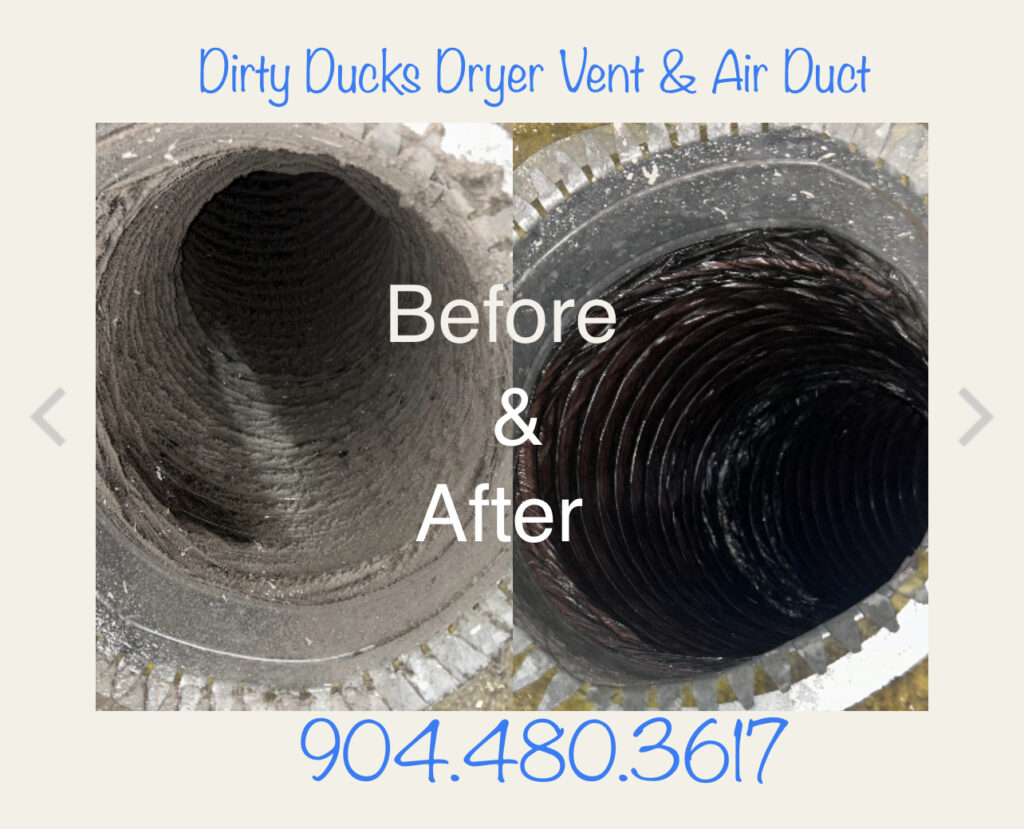
Assisted Living Dryer Vent Cleaning Jacksonville FL supports facilities that depend on reliable on-site laundry and need qualifying dryer-exhaust systems evaluated for lint buildup. Bedding, towels, clothing, and other washable items can keep dryers operating throughout the week. Every load sends fine fibers into the exhaust route, even when staff consistently clean the lint screens.
Dirty Ducks Dryer Vent & Air Duct Cleaning works with authorized administrators, maintenance contacts, and property managers to understand the dryer count, vent layout, access requirements, and operating schedule before defining service. A small residential-style assisted-living property may have a different system from a larger campus or centralized laundry room. Confirming those details protects residents, staff, equipment, and the accuracy of the quote.
Qualifying properties throughout Jacksonville, Florida can call or text 904.480.3617. Provide the facility details to request pricing and determine whether Assisted Living Dryer Vent Cleaning Jacksonville FL matches the property’s system and maintenance needs.
Why Assisted Living Dryer Vent Cleaning Jacksonville FL Matters
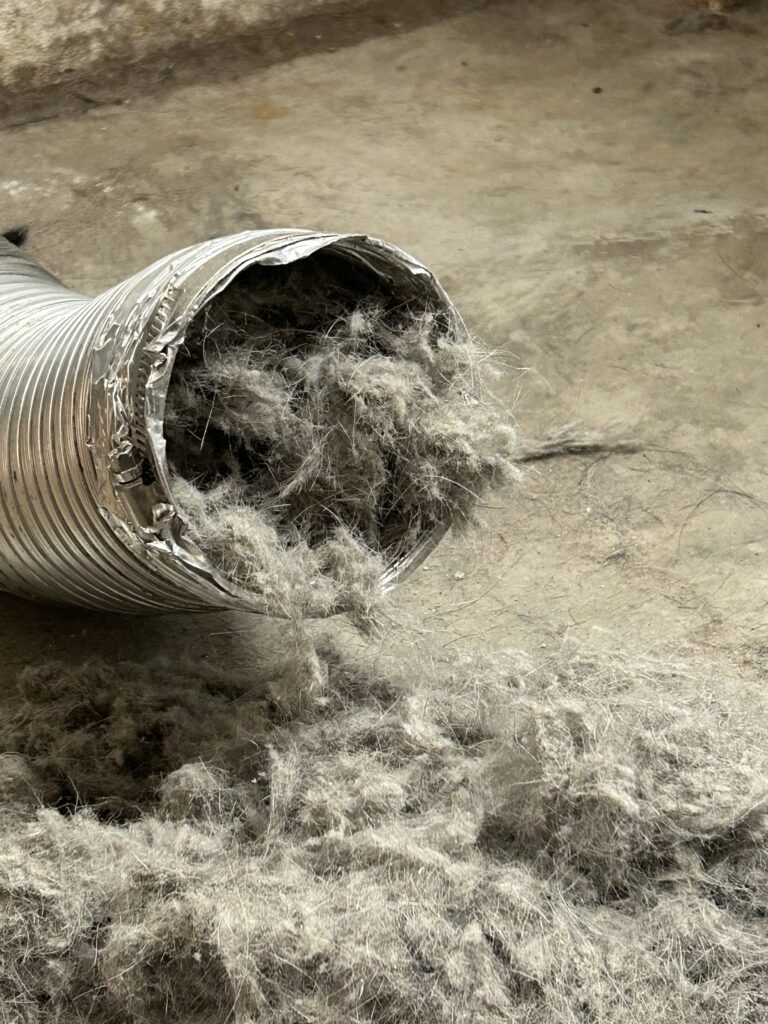
A dryer removes moisture by pushing heated exhaust through a dedicated duct to the exterior. The lint screen captures much of the loose fiber, but it cannot stop every particle. Remaining lint can settle along connections, elbows, vertical rises, and termination points. As the route narrows, the equipment has more difficulty releasing heat and moisture.
In an assisted-living environment, extended drying times can disrupt linen turnaround and staff workflow. Restricted exhaust may also contribute to excess appliance heat and retained combustible lint. Cleaning is therefore both an operational maintenance task and part of reducing preventable vent-related risk.
High Laundry Volume Changes the Maintenance Need
A facility that runs several loads each day moves more lint through its exhaust systems than a low-use household. Laundry volume, dryer count, fabric types, vent length, number of turns, and termination design should guide maintenance decisions. No single interval fits every assisted-living property.
Warning Signs in an Assisted-Living Laundry Area
Staff members often notice performance changes before management receives a formal maintenance request. Encourage them to report patterns such as:
- Normal linen loads requiring additional drying cycles
- Towels or bedding remaining damp while feeling unusually hot
- Excess heat or humidity in the laundry room
- A hot, dusty, or burning odor during operation
- Dryers displaying airflow warnings or stopping early
- Exterior termination dampers that barely open
- Visible lint around connections or exterior exits
- No documented vent-cleaning history
Smoke, scorching, a strong burning odor, or another immediate hazard requires the equipment to be taken out of use and handled through the facility’s emergency and safety procedures. Routine vent cleaning is not an emergency fire response or appliance-repair service.
Facility Information Needed Before Scheduling
Accurate planning is especially important in occupied care environments. The authorized contact should be prepared to provide:
- The number, type, and location of dryers
- Whether equipment is freestanding, stacked, or built into cabinetry
- The known route and exterior termination for each vent
- Reported performance or heat concerns
- Previous cleaning records, if available
- Resident-area, security, parking, and building-access rules
- Preferred service windows and operational restrictions
- Any known damaged ducts or appliance issues
This information helps Dirty Ducks determine whether the property and systems fall within its service scope and what preparation may be required.
How Assisted Living Dryer Vent Cleaning Is Coordinated
Once the property is confirmed as a fit, the appointment can be organized around the approved systems and facility schedule. A typical workflow includes:
- Confirm the authorized contact: Identify who can provide access, answer questions, and approve decisions.
- Review the system inventory: Verify which dryers and exhaust routes are included in the quote.
- Discuss occupied-area controls: Plan around resident access, staff workflow, noise, and restricted spaces.
- Inspect accessible components: Review reachable connections, vent paths, and terminations relevant to the service.
- Remove accessible lint: Use professional equipment to clean the agreed dryer-exhaust routes.
- Review visible findings: Communicate damage, unsuitable components, access limitations, or repair concerns.
Cleaning removes lint and debris. It does not diagnose every appliance fault, replace damaged vent material, reconnect hidden separations, or correct an improper route. Those concerns may require an appliance technician, contractor, or other qualified provider.
Resident and Staff Considerations During Service
Assisted-living facilities are active residential environments. The service contact should decide how the laundry area will be controlled, whether residents need notification, and which staff member will escort or assist the technician. Work zones should remain clear of residents, visitors, carts, and unrelated activity.
Management should communicate infection-control, privacy, check-in, identification, elevator, and restricted-area procedures before the appointment. Dirty Ducks can then determine whether the requirements are compatible with the planned work.
Reducing Disruption to Laundry Operations
Facilities may choose a lower-volume period or rotate dryers out of service according to the approved schedule. Laundry should be removed from the equipment, and staff should know which machines are temporarily unavailable. Good coordination prevents a maintenance visit from becoming an avoidable operational surprise.
Wall Exits, Roof Exits, and Shared Routes
Dryer exhaust may leave through a nearby wall, travel through concealed spaces, or rise to a roof termination. Each layout affects access and service complexity. Roof exits should never be inspected casually by untrained staff. Inform Dirty Ducks when roof access or building authorization is required.
Some multi-unit or institutional properties may have configurations outside a standard residential-style vent-cleaning scope. Do not assume that several dryers share a route or that a shared route can be serviced without a review. Provide plans or system information when available.
Benefits of Professional Dryer Vent Cleaning
When accessible lint is restricting the exhaust system, professional cleaning can support:
- A clearer route for dryer heat and moisture
- Removal of combustible lint from accessible vent surfaces
- Fewer repeat cycles when restriction caused slow drying
- Less unnecessary heat around qualifying laundry equipment
- A documented maintenance event for facility records
- Identification of visible damage or access problems
- More informed planning for future vent maintenance
Cleaning cannot guarantee a specific energy reduction, eliminate every fire risk, or extend equipment life by a fixed amount. Appliance condition, vent construction, laundry volume, staff practices, and unresolved repairs also affect outcomes.
Assisted Living Dryer Vent Cleaning and Fire Prevention
Lint is combustible, and restricted exhaust can contribute to elevated temperatures. Removing accumulated lint is one practical risk-reduction measure, but it should exist within the facility’s broader fire-prevention program.
Management should continue following equipment manufacturer instructions, lint-screen procedures, inspection schedules, staff training, alarm and suppression requirements, and applicable facility policies. Vent cleaning complements those responsibilities; it does not replace them.
Building a Dryer Vent Maintenance Record
Document which dryer and vent route were serviced, the date, reported symptoms, and visible concerns communicated. Numbering machines or maintaining an equipment list can help prevent confusion when several dryers are present.
Future cleaning intervals should be based on usage and observed conditions. A machine processing repeated bedding loads may require review sooner than an occasional-use resident laundry unit. Records allow management to adjust maintenance based on evidence.
When Cleaning Is Not the Complete Solution
Slow drying does not always mean the vent is dirty. Possible causes include heating problems, sensors, controls, motors, gas or electrical issues, damaged transitions, excessive duct length, and improper termination design. Cleaning can only address the removable buildup within the accessible exhaust route.
If performance does not improve after a verified restriction is removed, management should arrange appropriate appliance or vent-system evaluation. Continuing to run malfunctioning equipment can create additional risk and disruption.
Preparing the Facility for Service
Remove laundry, carts, chemicals, stored supplies, and fragile items from the work zone. Ensure that authorized staff can provide access to equipment rooms, utility areas, exterior terminations, or approved roof-access points. Secure resident access to the area according to facility policy.
Do not move heavy stacked dryers or disconnect gas and electrical components unless qualified and specifically instructed. Tell Dirty Ducks about tight cabinetry, bolted equipment, hard-piped utilities, or other limitations during the quote process.
Why Choose Dirty Ducks for Assisted Living Dryer Vent Cleaning Jacksonville FL
Dirty Ducks offers a direct planning process for qualifying assisted-living properties. The company focuses on the dryer-exhaust system and avoids presenting routine vent cleaning as a substitute for specialized facility work.
- Local communication for Jacksonville-area facilities
- Property-specific review before defining the scope
- Professional equipment for qualifying dryer vents
- Coordination with authorized facility contacts
- Clear separation between cleaning and repair needs
- Phone, text, and online quote-request options
This approach helps facility representatives understand what is included before the appointment is scheduled.
Request Assisted Living Dryer Vent Cleaning Jacksonville FL
If repeated laundry use, slow drying, excess heat, or an unknown maintenance history has raised concerns, contact Dirty Ducks. Assisted Living Dryer Vent Cleaning Jacksonville FL is available for qualifying properties and systems that match the company’s service capabilities.
Call or text 904.480.3617 to request a facility-specific quote. You may also submit the details through the contact page. Include the dryer count, appliance setup, vent exits, reported symptoms, building-access rules, and preferred service window.
Questions About Assisted Living Dryer Vent Cleaning Jacksonville FL
Does Dirty Ducks service every assisted-living facility?
Not automatically. Dryer count, system design, access, building requirements, and service scope must be reviewed to confirm that the property is a fit.
How often should assisted-living dryer vents be cleaned?
There is no single interval for every facility. Load volume, fabrics, vent length, turns, dryer count, and observed performance should guide maintenance.
Can high laundry volume increase lint accumulation?
Yes. More loads generally send more fibers into the exhaust system, making usage an important maintenance-planning factor.
Can cleaning fix a dryer that is not heating?
No. A failure to produce heat is generally an appliance issue. Vent cleaning addresses lint and debris within the exhaust route.
Can restricted vents cause excess laundry-room heat?
They can contribute when hot exhaust cannot move outdoors effectively. Disconnected ducts, appliance faults, and ventilation design may also be involved.
Can service be coordinated around resident routines?
Provide the operating schedule and restrictions when requesting service. Availability and compatibility with facility procedures must be confirmed.
Do residents need to leave the building?
Usually the question concerns controlling access to the laundry work zone, not evacuating the entire property. Management should determine resident safeguards based on the facility and approved scope.
Can roof-exit vents be serviced?
Roof routes require advance discussion of access, authorization, system layout, and safety requirements. Do not assume every roof configuration falls within scope.
Do you service multiple dryers?
Provide the dryer count and vent details for review. The quote and scheduling plan depend on the number and configuration of qualifying systems.
Will cleaning eliminate every fire risk?
No. It removes accessible lint, which is one risk-reduction measure. Facilities must continue all required equipment, electrical, gas, alarm, housekeeping, and fire-safety practices.
Can air-duct cleaning be requested separately?
You can ask about qualifying HVAC duct service, but it is a separate system with its own evaluation, scope, and quote.
How long does Assisted Living Dryer Vent Cleaning Jacksonville FL take?
Duration depends on dryer count, vent routes, access, terminations, buildup, and facility procedures. Details are required for a useful estimate.
How much does facility dryer vent cleaning cost?
Pricing depends on the actual equipment and approved scope. Call or text 904.480.3617 to request a quote.
How does an administrator request service?
Call or text 904.480.3617, or use the online contact form to provide the facility and system information.